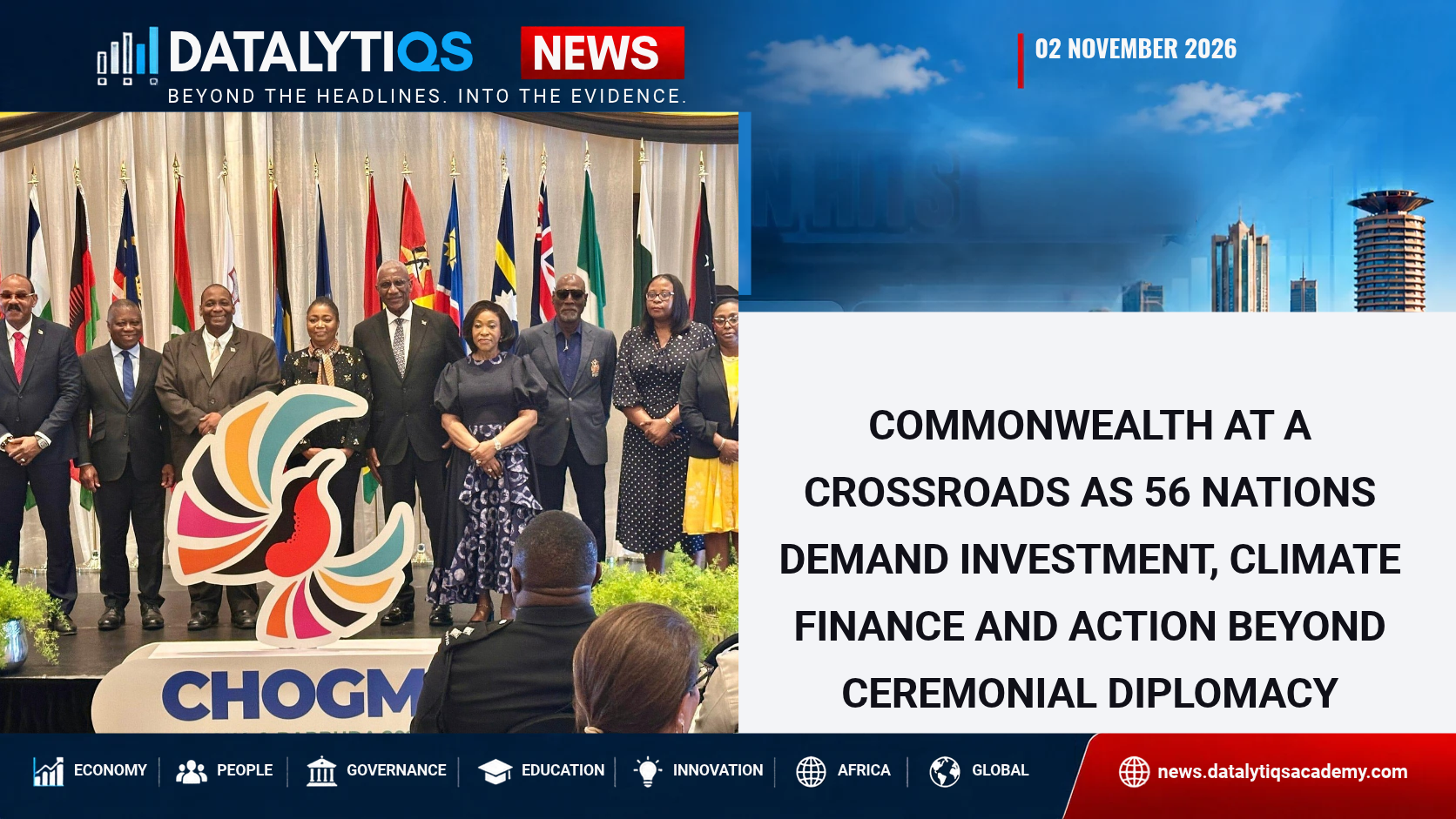
DATALYTIQS NEWS | AFRICAN AFFAIRS, GLOBAL GOVERNANCE & ECONOMIC DIPLOMACY | 2 NOVEMBER 2026
SPECIAL REPORT — COMMONWEALTH HEADS OF GOVERNMENT MEETING, ANTIGUA AND BARBUDA
ST JOHN’S, ANTIGUA AND BARBUDA — Leaders from across the 56-member Commonwealth are gathering in the Caribbean for a summit that will test whether the organisation can translate its diplomatic influence into measurable economic and development outcomes.
The 28th Commonwealth Heads of Government Meeting (CHOGM), scheduled for November 1–4, brings together representatives of countries accounting for approximately 2.7 billion people, nearly one-third of humanity.
The agenda encompasses trade barriers, international conflict, climate vulnerability, sovereign debt, digital skills, renewable energy and investment mobilisation. The summit is also confronting a politically sensitive question: how Britain and other former colonial powers should address the enduring consequences of transatlantic slavery.
Commonwealth Secretary-General Shirley Botchwey has argued that the organisation must strengthen trade and investment relationships amid rising tariffs, economic shocks and geopolitical fragmentation.
The central question is whether a voluntary association spanning some of the world’s largest economies and smallest island states can convert shared declarations into financed projects, employment and stronger economic resilience.
1. THE SUMMIT AT A GLANCE
Member countries
56
Across five regions
Population represented
2.7B
Approximately one-third of humanity
Investment-ready pipeline
$34B
Latest official summit estimate
Digital skills ambition
10M
Young adults targeted
Sources: Commonwealth Secretariat and Associated Press. The investment figure represents proposed projects seeking financing, not money already committed.
The summit’s official theme is “Accelerating Partnerships and Investment for a Prosperous Commonwealth.”
It is the first CHOGM under Botchwey’s leadership since she became Secretary-General in April 2025.
The gathering includes heads of government, foreign ministers, business leaders, investors, civil society organisations and youth representatives. Officials from several non-Commonwealth countries, including Qatar, Brazil and the United Arab Emirates, are also expected to participate.
2. WHY THIS COMMONWEALTH SUMMIT IS DIFFERENT
The Commonwealth has traditionally provided a platform for diplomacy, democratic principles, cultural relationships, technical cooperation and dialogue among countries with diverse political and economic systems.
Its modern institutional structure developed from the former British Empire, although membership is voluntary and not every member has a British colonial history.
King Charles III serves as Head of the Commonwealth, a symbolic position distinct from the political leadership of its 56 independent member states.
CHOGM is the association’s highest-level political gathering and takes place every two years. Commonwealth
The 2026 summit comes amid an especially demanding international environment.
Trade restrictions have intensified. Wars have disrupted energy markets and supply chains. Many developing countries face debt pressures. Small island states confront increasingly costly climate-related risks.
These challenges have increased demands for the Commonwealth to demonstrate practical economic value.
The distinction is important: the organisation is not a supranational government, a customs union or a development bank. Its capacity to deliver depends largely on voluntary commitments, national governments, investors and partner institutions.
3. THE $34 BILLION INVESTMENT AGENDA: FROM PROJECT PIPELINE TO REAL FINANCING
One of the summit’s most consequential initiatives is a portfolio of investment opportunities submitted by developing Commonwealth countries.
The Commonwealth Secretariat says 20 countries have presented investment-ready proposals currently valued at approximately $34 billion. Commonwealth
An earlier announcement described more than 60 projects worth around $30 billion, covering energy, transport, agriculture, manufacturing and green-economy sectors. The later $34 billion figure appears to reflect an updated pipeline valuation; the published material does not establish the precise reconciliation between the two totals. Commonwealth
Investment pipeline reported ahead of CHOGM 2026
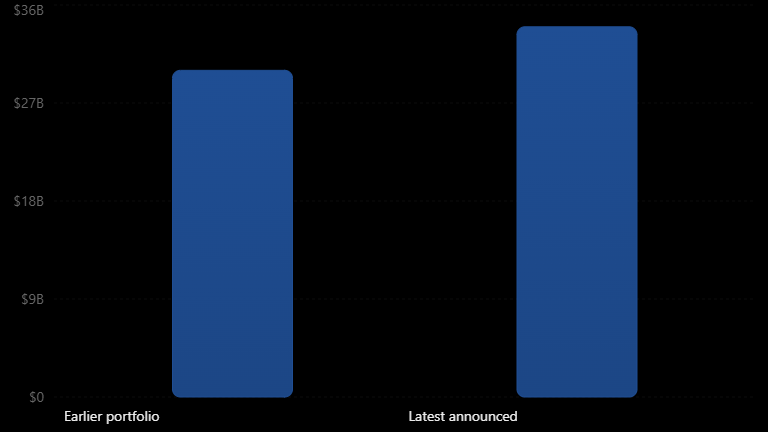
Both figures describe investment opportunities, not secured financing or expenditure.
This distinction matters for public accountability.
A $34 billion investment pipeline does not mean $34 billion has been raised, approved, disbursed or spent.
A credible assessment of the initiative will require tracking the projects through feasibility studies, financial commitments, financial close, procurement, construction and operational delivery.
For developing countries, project preparation is often as important as the initial investor announcement.
Weak feasibility studies, unclear land rights, insufficient revenue models, currency risks and procurement concerns can prevent otherwise attractive projects from reaching implementation.
The Commonwealth’s proposed investment platform could help address these constraints if it provides genuine investor matching, technical assistance and follow-through.
4. TRADE: CAN THE COMMONWEALTH REDUCE DEPENDENCE ON EXTERNAL MARKETS?
Botchwey has identified trade fragmentation and the use of tariffs as major challenges confronting member economies.
In comments to the Associated Press, she argued that stronger trade within the Commonwealth could reduce exposure to external tariff shocks. apnews.com
The logic is economically understandable.
Greater trade diversification can reduce dependence on a narrow group of export destinations, while improved trade facilitation can lower transaction costs.
However, Commonwealth membership does not automatically confer tariff-free access to other member markets.
Countries retain their own customs regimes and participate in separate trade arrangements, including regional economic communities and bilateral agreements.
Increasing intra-Commonwealth trade would therefore require practical measures involving customs cooperation, standards recognition, logistics, trade finance and digital documentation.
For African exporters, the potential value lies in identifying commercially viable markets rather than assuming historical relationships automatically create preferential access.
The Secretariat has indicated that leaders will consider a new trade work programme designed to reduce barriers among members. Commonwealth
5. DIGITAL SKILLS: A PROPOSED FUND FOR 10 MILLION YOUNG ADULTS
One of the clearest people-centred proposals is the creation of a fund intended to provide digital skills to approximately 10 million young adults.
Botchwey says the Commonwealth hopes to mobilise support from private companies, foundations and philanthropists. apnews.com
The proposed initiative is particularly relevant because more than 60% of the Commonwealth’s population is aged 29 or younger. Commonwealth
Digital-skills development could encompass foundational digital literacy, programming, cybersecurity, data analytics, artificial intelligence, digital entrepreneurship and other labour-market competencies.
However, the precise curriculum, funding model, country allocations and certification arrangements have not yet been established in the reporting reviewed.
The 10-million-person figure should therefore be treated as an announced ambition, not a completed training programme.
For the initiative to demonstrate measurable value, it will need to go beyond enrolment totals and report completion rates, competency gains, certification quality, employment outcomes and equitable access.
A training programme can reach millions without necessarily improving employability unless its content and delivery correspond to actual labour-market demand.
6. CLIMATE FINANCE: WHY SMALL STATES WANT MORE THAN PROMISES
Climate vulnerability is one of the defining issues for the Commonwealth.
According to the Secretariat, 33 of the world’s 42 small states belong to the organisation. AP reports that 49 of its 56 members have coastlines. Commonwealth+1
For small island developing states, climate change is not an abstract environmental concern. Rising seas, coastal erosion, storm damage, freshwater insecurity and threats to tourism infrastructure have direct fiscal and economic consequences.
The summit is expected to consider financing mechanisms that could support climate resilience and renewable-energy transitions.
The Commonwealth has also identified sustainable debt and access to concessional finance as priorities, including proposals to give greater weight to economic and climate vulnerability in financing decisions. Commonwealth
The climate-finance challenge
Many vulnerable states face a difficult combination of high adaptation costs, limited fiscal capacity and borrowing conditions that do not adequately reflect their exposure to climate shocks.
The policy debate therefore extends beyond the amount of money available.
It includes the terms on which finance is provided, whether assistance comes as grants or loans, how quickly funds can be accessed and whether projects strengthen long-term resilience.
For accountability, the summit’s eventual commitments should be assessed against actual financing rather than headline pledges.
A useful monitoring framework would distinguish between announced commitments, signed financing agreements, disbursements and completed projects.
7. RENEWABLE ENERGY: THE PROPOSED TRANSITION FUND
The Commonwealth is also seeking to establish a fund supporting countries moving away from fossil fuels toward renewable energy.
AP reports that officials expect the initiative to be part of the Antigua discussions. apnews.com
Potential applications could include solar power, wind energy, grid modernisation, battery storage and technical capacity development.
However, the available reporting does not establish the proposed fund’s capitalisation, eligibility rules or confirmed contributions.
The financing structure will matter.
Renewable-energy investment in developing countries can be constrained by high capital costs, currency risk, weak electricity networks and uncertain revenue arrangements.
A successful financing mechanism would need to address those barriers rather than simply announce ambitious installation targets.
For African economies, the practical opportunity lies in combining energy investment with industrial development, skills transfer, local enterprise participation and reliable electricity access.
8. REPARATIONS: THE HISTORICAL DISPUTE THE SUMMIT CANNOT IGNORE
The question of reparations for transatlantic slavery has emerged as one of the summit’s most sensitive political issues.
Caribbean governments and reparatory-justice advocates have long argued that the consequences of slavery and colonial exploitation continue to influence contemporary inequalities in wealth, education, health and development.
The Caribbean Community, CARICOM, has pursued a reparatory-justice agenda that includes formal acknowledgment, educational and health investment, institutional reform and other measures of redress.
British Prime Minister Andy Burnham has indicated openness to considering a formal apology and structured dialogue, while rejecting direct financial reparations.
He has instead proposed working with other governments and investors on debt restructuring for poorer Commonwealth countries. apnews.com
Caribbean leaders have welcomed the willingness to discuss historical responsibility but maintain that debt relief alone cannot substitute for reparatory justice.
Saint Lucia’s Prime Minister Philip J. Pierre, speaking as CARICOM chair, has emphasised that a meaningful dialogue should not exclude potential remedies before negotiations begin. apnews.com
Why the agenda itself is contested
The Guardian reported allegations by former St Vincent and the Grenadines Prime Minister Ralph Gonsalves that British officials had opposed formally placing reparations on the summit agenda.
The UK Foreign Office rejected those allegations and said it had not instructed other Commonwealth members to exclude the subject. theguardian.com
This distinction is essential: the reported disagreement concerns both the substance of reparations and whether the matter should be formally addressed through the Commonwealth’s collective processes.
Reparations are not listed as a formal headline agenda item, but Caribbean leaders are expected to raise the subject during summit discussions.
King Charles III’s presence adds historical and symbolic significance. He serves as Head of the Commonwealth, although he does not independently determine the policies of its member governments.
9. THE AFRICAN DIMENSION: WHY COMMONWEALTH MEMBERSHIP MATTERS
Africa constitutes a major part of the Commonwealth’s membership, including Kenya, Ghana, Nigeria, South Africa, Rwanda, Uganda, Tanzania, Zambia and numerous other states.
African governments have substantial interests in the Antigua agenda.
Trade facilitation could create additional export and investment opportunities. Climate finance could support adaptation and energy infrastructure. Digital-skills partnerships could help address youth unemployment and technological exclusion.
Debt reform is also consequential because debt-servicing obligations can restrict governments’ capacity to finance public services and development investment.
Nevertheless, these opportunities will depend on national implementation.
A Commonwealth declaration cannot replace domestic reforms involving public financial management, procurement transparency, investment regulation, educational quality and infrastructure development.
The organisation’s comparative advantage may lie in convening governments and investors, providing technical assistance and facilitating cooperation across different regions.
10. WHAT THE SUMMIT MEANS FOR KENYA
Kenya’s interests in CHOGM 2026 extend across trade, education, technology, climate resilience and public-sector governance.
| Priority | Potential relevance to Kenya | Evidence of success to monitor |
|---|---|---|
| Trade facilitation | Export market diversification and lower administrative barriers | New agreements, trade volumes and reduced clearance costs |
| Digital skills | Training opportunities in data analytics, AI and digital services | Funded training places, certifications and employment outcomes |
| Climate finance | Resilience, clean energy and adaptation investment | Signed financing agreements and actual disbursements |
| Investment mobilisation | Infrastructure, agriculture, manufacturing and technology projects | Projects reaching financial close and implementation |
| Debt reform | Improved fiscal space under viable financing arrangements | Borrowing terms, debt-service costs and fiscal outcomes |
| Governance | Technical cooperation and institutional capacity | Implemented reforms and independently measured results |
These are potential areas of benefit. The summit has not yet established specific financing allocations or programme entitlements for Kenya.
For Kenyan policymakers, the practical task will be to identify eligible programmes, prepare credible investment proposals and engage with relevant Commonwealth institutions.
For universities, training providers and research organisations, the digital-skills agenda could eventually create opportunities for partnerships, curriculum development, assessment and monitoring.
However, participation arrangements will need to be confirmed before institutions can responsibly claim access to the proposed funding.
11. THE COMMONWEALTH’S ECONOMIC WEIGHT
The Commonwealth Secretariat estimates that its members’ combined GDP was approximately $15.9 trillion in 2025 and projects an increase to $16.9 trillion in 2026 and $20 trillion by 2029. Commonwealth
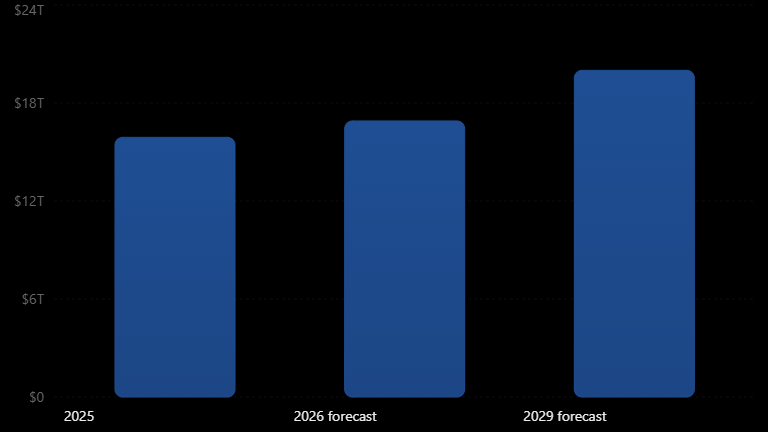
Commonwealth Secretariat estimates and projections. Forecast figures are not realised economic output.
These figures demonstrate the association’s economic scale, but they should be interpreted carefully.
Combined GDP is not a common budget, pooled investment fund or amount available for Commonwealth programmes.
The member economies differ substantially in income, industrial capacity, trade structure and access to finance.
Moreover, economic scale does not automatically translate into coordinated policy because the Commonwealth operates through voluntary cooperation rather than binding economic integration.
The challenge is to turn that scale into practical partnerships without overstating what the organisation can compel member governments to do.
12. BUSINESS DIPLOMACY: MORE THAN 900 DELEGATES EXPECTED
The Commonwealth Enterprise and Investment Council is organising the Commonwealth Business Forum from November 2–4.
The forum is expected to bring together more than 900 delegates, including government officials, business leaders and investors.
Its agenda covers climate resilience, technology, finance, education, entrepreneurship, tourism, creative industries and healthcare.
The programme includes business-matching opportunities and direct meetings between potential investors and project sponsors.
Such meetings can be valuable, particularly for countries seeking to attract private capital.
However, participation counts and networking sessions are process indicators.
The stronger measures of success are commercial agreements, committed capital, completed transactions, implemented projects and resulting economic activity.
13. HOW TO MEASURE WHETHER CHOGM 2026 DELIVERS
DATALYTIQS ANALYTICAL FRAMEWORK — PROPOSED ACCOUNTABILITY INDICATORS
| Summit commitment | Baseline or stated ambition | What should be measured after the summit |
|---|---|---|
| Investment mobilisation | Approximately $34 billion in proposed projects | Financing committed, financial close and project completion |
| Digital skills | Target of about 10 million young adults | Funding, enrolment, completion, competencies and employment |
| Trade cooperation | Proposed work programme | Specific barriers removed and changes in trade costs |
| Climate resilience | Financing and partnership agenda | Adaptation funding disbursed and measurable resilience outcomes |
| Renewable-energy transition | Proposed financing fund | Fund capitalisation, projects financed and operational capacity |
| Debt and vulnerability | Proposed common financing platform | Adopted financing changes and measurable fiscal effects |
| Reparatory justice | Calls for structured dialogue | Formal process, participation, agreed scope and subsequent action |
This is an analytical framework, not an official Commonwealth performance scorecard.
It addresses an important accountability problem: summit announcements are often measured by their ambition, while implementation receives less sustained public attention.
For the Antigua meeting, a useful evaluation should distinguish commitments announced during the summit from outcomes achieved in subsequent months and years.
14. WHAT HAS BEEN CONFIRMED—AND WHAT REMAINS PROPOSED?
| Claim | Evidence status |
|---|---|
| CHOGM 2026 is being held in Antigua and Barbuda, November 1–4 | Confirmed |
| The Commonwealth comprises 56 countries and approximately 2.7 billion people | Confirmed |
| More than 50 leaders are expected | Reported by AP |
| The Secretariat has announced an approximately $34 billion investment pipeline | Confirmed as proposed projects |
| A digital-skills fund targeting 10 million young adults is planned | Announced ambition, not completed programme |
| A renewable-energy financing fund is under discussion | Proposed |
| Britain has agreed to pay slavery reparations | Not established; the British government rejects direct financial reparations |
| Caribbean governments are pressing for reparatory justice | Confirmed |
| All proposed financing has been secured | Not established |
| A final summit communiqué has been adopted | Not established as of this reporting cut-off |
15. WHAT TO WATCH BEFORE THE SUMMIT CLOSES
The most consequential developments will be the final leaders’ communiqué, confirmed financing commitments, the design of the proposed digital-skills and renewable-energy funds, and any agreement on trade facilitation or debt reform.
The response to Caribbean demands for structured reparations dialogue will also be significant.
For each announcement, the essential questions are straightforward: Who is committing resources? How much is legally committed? Who qualifies? When will implementation begin? And what evidence will establish whether the programme has delivered?
Those questions are particularly important because the summit’s stated purpose is to accelerate investment rather than simply reaffirm cooperation.
CONCLUSION: THE COMMONWEALTH’S RELEVANCE WILL BE MEASURED IN RESULTS
The Antigua summit is taking place at a time when the Commonwealth’s members face markedly different but interconnected challenges.
Large economies are navigating trade tensions and geopolitical uncertainty. Developing countries are seeking affordable capital, employment and access to technology. Small island states are confronting climate vulnerabilities that threaten infrastructure, livelihoods and public finances.
Caribbean governments are also pressing for a more substantive reckoning with the economic and social legacies of slavery.
The Commonwealth’s ability to convene 56 independent countries remains institutionally significant. Yet convening power alone does not guarantee implementation.
The decisive question is whether Antigua produces funded projects, practical trade reforms, accessible climate finance, credible digital-skills programmes and sustained political dialogue—or another collection of commitments whose outcomes remain difficult to measure.
For an organisation representing 2.7 billion people, the appropriate measure of relevance is not the size of its summit photograph. It is the extent to which its decisions produce demonstrable benefits for the people it represents.
DATALYTIQS POLITICAL SATIRE
COMMONWEALTH SUMMIT: 56 COUNTRIES, 2.7 BILLION PEOPLE—AND NO MORE ROOM FOR EMPTY PROMISES!
Commonwealth leaders are meeting in Antigua to discuss trade, climate finance, renewable energy, digital skills and investment.
The organisation represents 2.7 billion people and has unveiled an investment pipeline worth approximately $34 billion.
Meanwhile, Caribbean nations are demanding serious dialogue on slavery reparations.
The Commonwealth has mastered the art of assembling presidents, prime ministers, flags and royal photographs. Now comes the harder assignment: delivering results.
Young people need skills and jobs. Vulnerable countries need affordable climate finance. Businesses need functioning trade partnerships.
And historical injustices cannot be resolved through ceremonial handshakes alone.
The real test of Antigua is simple: when the flags come down and the motorcades leave, will anything have changed beyond the hotel occupancy figures?
DatalytIQs News — Beyond the Headlines. Into the Evidence.
PRIMARY SOURCES AND FURTHER READING
ASSOCIATED PRESS — 2 NOVEMBER 2026
Main report on the summit, economic priorities, digital skills, climate financing and Caribbean concerns.Dozens of Commonwealth leaders descend on Antigua
COMMONWEALTH SECRETARIAT — OFFICIAL CHOGM 2026 INFORMATION
Summit dates, membership, population, programme and institutional priorities.Commonwealth Heads of Government Meeting 2026
COMMONWEALTH SECRETARIAT — PRE-SUMMIT STATEMENT
Shirley Botchwey’s investment agenda and the latest $34 billion project-pipeline figure.CHOGM 2026: Our moment to shape what comes next
COMMONWEALTH ENTERPRISE AND INVESTMENT COUNCIL — 29 OCTOBER 2026
Business Forum participation, sectors and investor engagement.Commonwealth Business Forum 2026
ASSOCIATED PRESS — 1 NOVEMBER 2026
Britain’s position on slavery reparations and Caribbean governments’ responses.UK position on slavery reparations shifts, but payments remain disputed
THE GUARDIAN — 1 NOVEMBER 2026
Disagreement over placing reparations on the formal Commonwealth summit agenda.Dispute over slavery reparations and the CHOGM agenda
DATALYTIQS NEWS — BEYOND THE HEADLINES. INTO THE EVIDENCE.
Reporting cut-off: 2 November 2026. Announced project pipelines, proposed funds and summit objectives are distinguished from legally committed financing and completed outcomes. The summit continues through 4 November.