DATALYTIQS NEWS | GLOBAL GEOPOLITICS & ENERGY SECURITY | 2 NOVEMBER 2026
SPECIAL REPORT — QATAR, IRAN, THE UNITED STATES AND THE FUTURE OF GULF SECURITY
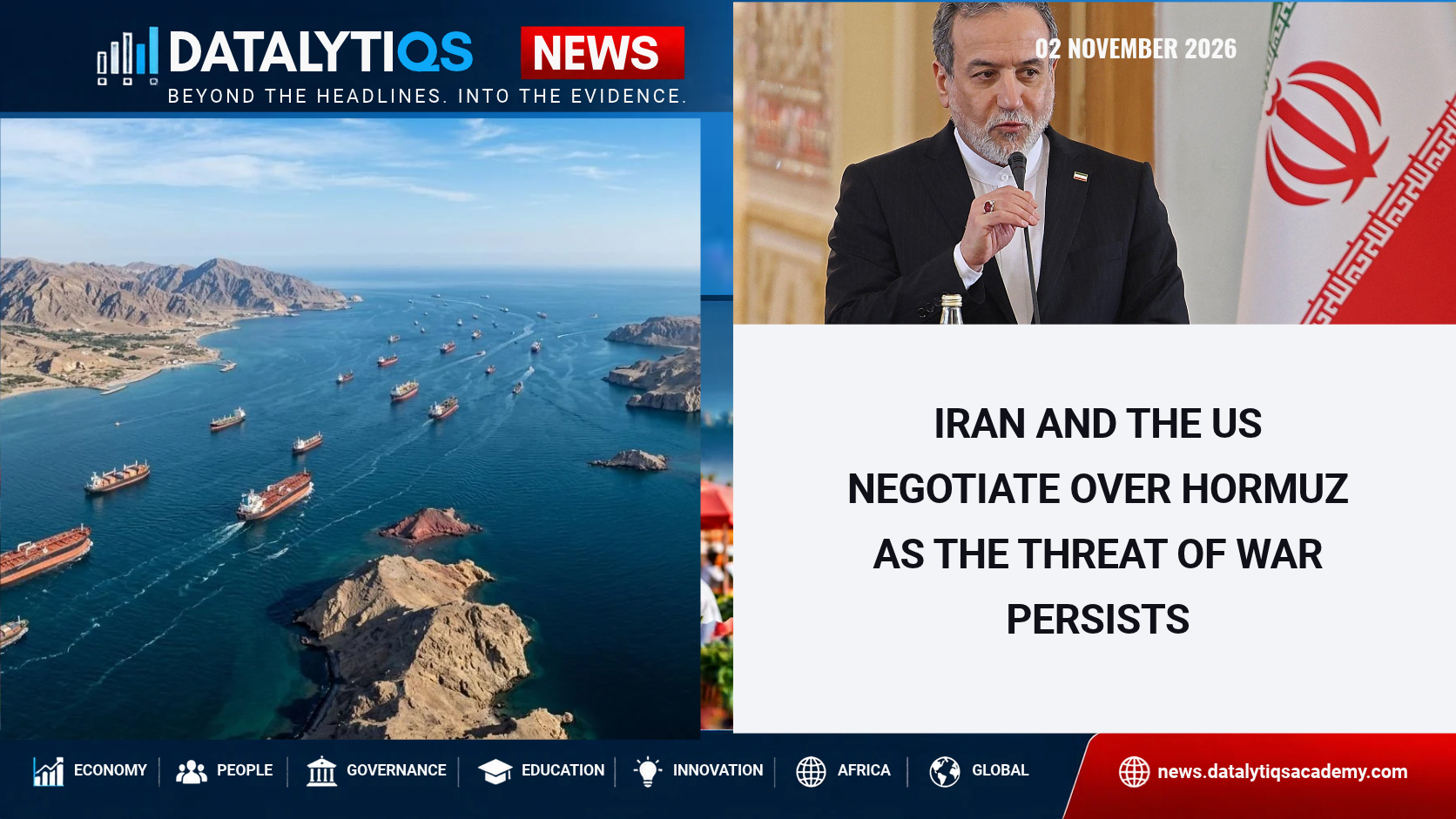
DOHA, QATAR — Iranian negotiators and Qatari mediators have completed a third consecutive day of discussions aimed at finding a diplomatic settlement to the eight-month conflict between Iran and the United States and Israel. But despite signs of renewed engagement, the negotiations have produced no announced final agreement, and the threat of further military escalation remains.
The talks, held on Sunday, November 1, are focused partly on reopening the Strait of Hormuz, the strategic waterway connecting the Persian Gulf with international shipping routes. They are being coordinated through contacts with Washington, although the principal negotiations in Doha are indirect.
Iranian Foreign Minister Abbas Araghchi says diplomacy is progressing but has warned that Tehran remains prepared for military confrontation if attacked.
President Donald Trump has described the negotiations as productive while leaving open the possibility of further military action after the November 3 US midterm elections.
The result is an uneasy diplomatic moment: negotiations are continuing, commercial shipping remains disrupted, and governments across the Gulf are preparing for both an agreement and renewed conflict. reuters.com+2
1. THE LATEST DEVELOPMENTS
Conflict duration
8 MONTHS
War began February 28, 2026
Doha negotiations
DAY 3
Sunday, November 1
Hormuz proposal
48 HOURS
Conditional reopening target
Agreement status
PENDING
No final settlement announced
According to Reuters, Iranian officials and Qatari mediators met for a third day after discussions in Tehran on Friday and Doha on Saturday.
Araghchi described the consultations as continuing and progressing, but said the parties had not reached a final conclusion.
The central proposal under discussion would allow the Strait of Hormuz to reopen within two days of a potential agreement, subject to conditions that remain disputed.
The 48-hour timetable is a negotiating proposal, not a confirmed reopening date.
2. HOW THE DOHA TALKS DEVELOPED
- FEBRUARY 28, 2026 — WAR BEGINS The United States and Israel launch military operations against Iran. The conflict subsequently spreads across the region, disrupting energy infrastructure and commercial shipping.
- JUNE 2026 — INTERIM UNDERSTANDING FAILS Earlier mediation produces an interim peace arrangement, but the process subsequently breaks down, leaving fundamental disputes unresolved.
- LATE SEPTEMBER — IRAN PROPOSES A SEVEN-DAY PLAN Tehran advances a phased proposal linking the reopening of Hormuz to sanctions relief, the lifting of shipping restrictions and access to frozen assets. Washington rejects the proposal.
- OCTOBER 28 — QATAR’S REVISED FRAMEWORK Reuters reports that Qatari mediators have presented a separate seven-day confidence-building proposal. An Iranian official describes the ideas as unacceptable.
- OCTOBER 30–NOVEMBER 1 — INTENSIVE MEDIATION Qatari officials hold talks in Tehran before Iranian negotiators travel to Doha. The discussions continue for three consecutive days, with a shortened two-day Hormuz reopening proposal emerging as a possible first step.
This chronology reveals an important feature of the negotiations: the parties have been discussing several overlapping proposals, rather than implementing one already accepted peace agreement.
The current diplomatic effort is therefore best understood as an attempt to establish mutually acceptable sequencing and guarantees.
3. WHAT IRAN WANTS
Iran’s demands extend beyond reopening a shipping route.
According to Araghchi’s account reported by Al Jazeera, Tehran is seeking relief from US economic restrictions and changes to regional security arrangements as conditions for further progress.
The reported demands include:
- Lifting recently imposed sanctions and restoring oil-export waivers.
- Removing restrictions affecting Iranian ports, oil shipments and access to frozen assets.
- Reducing the US military presence in the region.
- Recognising designated shipping routes through Hormuz developed by Iran and Oman.
- Ending hostilities across the wider regional conflict, including attacks involving Lebanon.
These are Iranian negotiating positions, not conditions accepted by Washington.
Iran’s position reflects a central concern: reopening Hormuz without corresponding sanctions relief could surrender one of Tehran’s most consequential negotiating instruments while leaving its economy exposed to continuing pressure.
However, maintaining restrictions on commercial passage also imposes costs on neighbouring countries and the wider international economy.
4. WHAT THE UNITED STATES WANTS
Washington has indicated that it remains open to a diplomatic solution, but the available reporting shows substantial differences over the order in which concessions should occur.
US Secretary of State Marco Rubio said Trump would prefer a negotiated settlement, while maintaining that the United States retains military options.
Washington has also sought to address Iran’s nuclear programme as part of the negotiations.
Tehran, by contrast, has insisted that certain sanctions and shipping restrictions must be addressed first, while Iranian officials have resisted making the nuclear programme an immediate negotiating subject.
The disagreement is not merely over the substance of a settlement.
It is also over which side must act first and what guarantees exist that the other side will fulfil its commitments.
A settlement could therefore require simultaneous or closely sequenced steps, third-party verification and mechanisms for responding to alleged violations.
5. QATAR’S ROLE: MEDIATOR BETWEEN TWO SIDES THAT DO NOT TRUST EACH OTHER
Qatar has emerged as a central diplomatic intermediary, working alongside Pakistan and maintaining contacts with Washington and Tehran.
Its mediation involves transmitting proposals, clarifying demands and exploring confidence-building arrangements.
The Guardian reports that Qatari efforts include negotiations concerning the release of more than $6 billion in Iranian assets as part of a potential agreement. The report also describes efforts to shorten the timetable for reciprocal actions from seven days to two.
The existence of these discussions does not establish that the assets have been released or that the US has accepted the proposed arrangement.
Qatar’s role is particularly sensitive because Gulf states have themselves experienced military threats and attacks during the conflict.
Its mediation must therefore address both the demands of the principal belligerents and the security concerns of countries situated close to the conflict.
6. WHY THE STRAIT OF HORMUZ IS THE CENTRE OF THE NEGOTIATIONS
The Strait of Hormuz connects the Persian Gulf with the Gulf of Oman and the Arabian Sea. It is one of the world’s most consequential maritime energy corridors.
Before the war, approximately one-fifth of global petroleum liquids consumption passed through the strait, based on historical energy-flow estimates. That figure describes its pre-conflict significance, not the volume currently passing through it.
The waterway is strategically important because Saudi Arabia, Iraq, Kuwait, Qatar, the United Arab Emirates and Iran depend on Gulf export infrastructure to varying degrees.
Some producers can redirect shipments through pipelines or alternative ports, but bypass capacity is limited.
HOW A HORMUZ DISRUPTION REACHES THE GLOBAL ECONOMY
Restricted tanker movements and security threats
Higher freight, insurance and energy supply costs
Pressure on fuel prices, industrial production and transport
Inflation, trade disruptions and household purchasing-power risks
The economic effect is not confined to the oil physically transported through Hormuz. Market participants also price the risk of future shortages, attacks, shipping delays and insurance losses.
Even an agreement to reopen the waterway may not immediately restore normal trade. Shipowners and insurers would still need confidence that passage is secure and commercially viable.
7. OIL PRICES: MARKETS ARE PRICING BOTH DIPLOMACY AND WAR
Recent energy-market reporting demonstrates the economic significance of the negotiations.
Brent crude
$113+
Reported recent settlement, per barrel
US crude
~$104
Reported recent level, per barrel
Indicative recent market figures, not live trading quotations. wsj.com
Reuters reported on October 29 that Brent was trading near $115 a barrel despite easing somewhat on renewed diplomatic expectations. The price remained approximately $10 above its September average.
More recent energy reporting indicates that verified Hormuz transits remain approximately half their prewar level, while alternative export routes are experiencing increased traffic. wsj.com
These figures illustrate why markets are sensitive to diplomatic developments.
A credible settlement could reduce the security premium embedded in oil prices. Conversely, renewed attacks on ships, export terminals or regional infrastructure could intensify supply concerns.
Neither outcome is guaranteed, and oil prices also respond to production policy, inventories, global demand and currency conditions.
8. THE TWO-DAY PROPOSAL: WHAT WOULD HAVE TO HAPPEN?
The proposed 48-hour reopening arrangement is important because it seeks to shorten the period during which one party must act without receiving the expected reciprocal concession.
The following illustrates the negotiating logic, rather than an agreed implementation schedule.
| Stage | Possible action | Outstanding question |
|---|---|---|
| Initial political understanding | US and Iran accept a mediated framework | Have both sides formally agreed? |
| Economic concessions | Sanctions, asset access and shipping restrictions addressed | Which measures are legally and practically reversible? |
| Hormuz reopening | Iran permits wider commercial passage | Who verifies safe passage and compliance? |
| Broader negotiations | Talks address nuclear and regional security issues | Which subjects and guarantees are acceptable? |
| Continued monitoring | Mediators assess implementation | What happens if either side alleges a violation? |
Iranian officials have publicly described a proposal under which the strait could reopen within two days of a potential agreement.
There is no confirmed final deal, and the reporting does not establish that the parties have accepted a common verification mechanism. Al Jazeera+1
The sequencing problem is especially difficult because sanctions relief can require legal and administrative action, while the restoration of maritime traffic also depends on physical security and private-sector confidence.
9. MILITARY PREPARATIONS CONTINUE ALONGSIDE DIPLOMACY
The diplomatic activity has not been accompanied by a general abandonment of military preparations.
Iran’s Supreme Leader Mojtaba Khamenei has ordered the armed forces to prepare for possible attacks, while Iranian officials have warned that renewed US or Israeli strikes could prompt retaliation across the region.
Rubio has said Trump has not decided whether to authorise new attacks.
Trump has indicated that he will not launch fresh strikes before the November 3 midterms, but has not ruled out action afterwards.
These statements are important, but threats and readiness announcements should not be confused with confirmed future military decisions.
The period immediately after the US elections is therefore attracting particular diplomatic attention.
10. THE REGIONAL DIMENSION: THE GULF STATES HAVE THEIR OWN SECURITY INTERESTS
The consequences of the conflict extend beyond Iran, Israel and the United States.
The United Arab Emirates, Bahrain, Saudi Arabia, Qatar and other regional states have experienced security threats, commercial disruptions or direct attacks.
At the Manama Dialogue, UAE presidential adviser Anwar Gargash argued that military solutions would not provide a straightforward exit from the crisis and emphasised the importance of diplomatic engagement.
The region also faces a wider maritime-security problem.
Reporting has documented attacks involving energy infrastructure and commercial shipping, including a reported strike against a Qatar-linked LNG tanker near Hormuz.
Such incidents complicate negotiations because a bilateral understanding between Washington and Tehran would not automatically resolve every regional confrontation or guarantee the security of all shipping routes.
A durable arrangement may require additional understandings involving neighbouring states and measures to prevent attacks by other armed actors.
11. THE NUCLEAR QUESTION REMAINS A MAJOR OBSTACLE
Iran’s nuclear programme is among the most difficult unresolved issues.
Washington has sought to incorporate the programme into negotiations, while Tehran maintains that its activities are for peaceful purposes and objects to external demands that it considers incompatible with its sovereignty.
Iranian officials have also made conflicting public statements about how much flexibility exists for future nuclear discussions.
The Guardian reports that Iran’s deputy parliamentary speaker rejected nuclear negotiations under pressure, while other reporting describes proposals that could eventually restart broader talks.
These positions suggest that agreement on Hormuz may be easier to conceptualise than a comprehensive settlement of the underlying security dispute.
A maritime reopening arrangement could therefore serve as an initial confidence-building measure without resolving all nuclear disagreements.
12. THREE POSSIBLE PATHWAYS FROM DOHA
| Scenario | Diplomatic development | Potential consequences |
|---|---|---|
| Phased agreement | Reciprocal economic concessions and verified reopening of Hormuz | Improved shipping conditions and reduced energy-market uncertainty |
| Prolonged negotiations | Talks continue without a final agreement | Continued shipping restrictions, market volatility and military readiness |
| Renewed escalation | Further attacks and retaliation interrupt diplomacy | Greater threats to civilian safety, energy infrastructure and regional trade |
These are analytical scenarios, not predictions or assigned probabilities.
The immediate evidence to monitor includes formal statements from mediators, actual changes in sanctions, authenticated maritime-transit data, verified incidents involving shipping and any announced mechanism for supervising implementation.
13. WHAT THE DOHA NEGOTIATIONS MEAN FOR KENYA AND AFRICA
For Kenya, the principal exposure is economic rather than military.
Kenya imports petroleum products, making domestic fuel costs sensitive to international energy prices, freight charges, exchange-rate movements and applicable taxes and levies.
A prolonged disruption of Gulf supplies could affect transport costs, food distribution, electricity generation costs in relevant segments, manufacturing and household purchasing power.
The transmission is not instantaneous. Domestic pump prices also depend on procurement arrangements, pricing periods, the USD/KES exchange rate and decisions by Kenya’s Energy and Petroleum Regulatory Authority.
ILLUSTRATIVE OIL-PRICE SENSITIVITY
Change in the benchmark crude price, assuming a starting price of $115 per barrel. This is a scenario calculation, not a forecast of Kenyan pump prices.
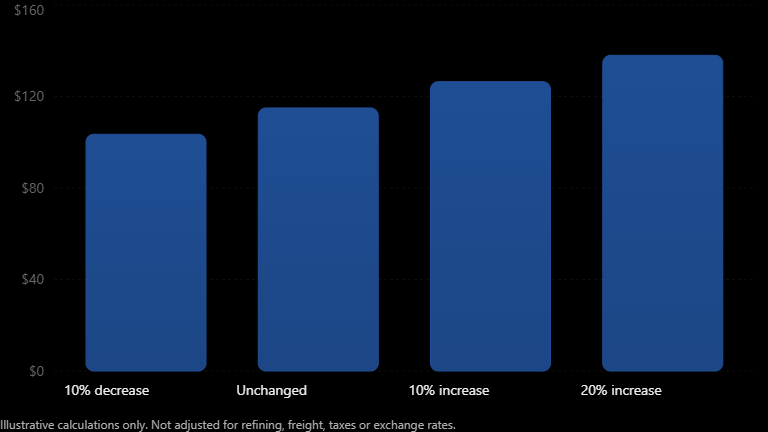
A 10% increase from $115 would raise the benchmark price by $11.50 per barrel. The corresponding Kenyan retail-price effect cannot be inferred without additional data.
For African governments and businesses, relevant monitoring indicators include international oil benchmarks, tanker insurance rates, shipping delays, exchange rates, domestic fuel-price reviews and inflation.
The conflict also illustrates the importance of energy diversification, strategic fuel planning and regional trade resilience.
14. WHAT HAS BEEN VERIFIED—AND WHAT REMAINS UNCERTAIN
| Statement | Evidence status |
|---|---|
| Iranian negotiators held a third day of talks in Doha | Confirmed by Reuters reporting |
| Qatar is mediating through contacts involving Washington | Confirmed in contemporary reporting |
| Iran has discussed reopening Hormuz within two days of a deal | Confirmed as a proposal |
| The US has accepted Iran’s conditions | Not established |
| A final ceasefire or comprehensive peace agreement exists | Not established |
| Iran and the US are conducting direct negotiations in Doha | Not established by the reporting reviewed |
| Military escalation remains possible | Supported by public statements and readiness measures |
| Hormuz reopening would immediately restore prewar oil flows | Not established |
CONCLUSION: DOHA MAY OPEN A DIPLOMATIC EXIT, BUT PEACE REQUIRES MORE THAN REOPENING HORMUZ
The third day of negotiations demonstrates that diplomatic channels remain active despite eight months of war, severe commercial disruption and continued military threats.
Qatar’s mediation has brought forward proposals designed to link economic concessions with the reopening of a vital shipping corridor.
Yet the most difficult questions remain unresolved: sanctions relief, maritime security, Iran’s nuclear programme, regional military activity and the guarantees required to sustain an agreement.
The approaching US midterm elections add political urgency, but they do not determine the outcome of the negotiations.
The critical test will be whether the parties can convert diplomatic proposals into reciprocal, verifiable actions that protect civilians, restore commercial navigation and reduce the risk of renewed hostilities.
For the international economy, reopening Hormuz would be significant. For the people living under the threat of renewed war, a durable cessation of hostilities would matter even more.
DATALYTIQS POLITICAL SATIRE
DOHA PEACE TALKS: THE DIPLOMATS HAVE ARRIVED, BUT THE MISSILES HAVEN’T RETIRED!
Iran and Qatar are negotiating a possible end to the eight-month war, with the Strait of Hormuz at the centre of the discussions.
Tehran says it is ready for diplomacy and defence. Washington says it prefers a deal but is keeping military options open.
Apparently, everyone has brought a peace proposal to Doha—and kept a war plan in the briefcase!
Meanwhile, the global economy is watching an essential oil corridor become a bargaining instrument.
The real breakthrough will not be another handshake or optimistic press statement. It will be an agreement that ships can safely navigate, markets can trust and civilians can live with.
Hormuz was built by geography, not politicians. The world should not have to negotiate a peace treaty every time a tanker wants to pass!
SOURCES AND FURTHER READING
REUTERS — 1 NOVEMBER 2026
Primary reporting on the third day of Doha talks, Iran’s position and contacts with Washington.Iran and Qatari mediators hold third day of talks
AL JAZEERA — 1 NOVEMBER 2026
Detailed account of Iranian demands, the two-day Hormuz proposal and continuing military threats.Mediators continue US–Iran negotiations: What we know
THE GUARDIAN — 1 NOVEMBER 2026
Reporting on the asset-release negotiations, compressed timetable and regional shipping risks.Negotiators braced for worst over US–Iran talks
ASSOCIATED PRESS — 2 NOVEMBER 2026
Regional reactions, UAE diplomatic position and continuing security concerns.UAE says military solutions offer no quick exit from Iran crisis
REUTERS — 29 OCTOBER 2026
Oil-price implications of the diplomatic uncertainty.Energy Watch: Waiting game
DATALYTIQS NEWS — BEYOND THE HEADLINES. INTO THE EVIDENCE.
Research cut-off: 2 November 2026. This report distinguishes verified diplomatic activity, attributed government positions, proposed agreements and scenario-based economic analysis. No final peace agreement or confirmed reopening date has been established.